The world of gemstone enhancement has witnessed a significant breakthrough with Thailand's innovative "Su Mian Bao" technique, a revolutionary approach to rough stone optimization. This cutting-edge method, whose name translates to "plain noodle bun" in Chinese due to its layered approach, has been making waves in the gemological community for its ability to transform ordinary-looking rough stones into visually stunning specimens while maintaining their structural integrity.
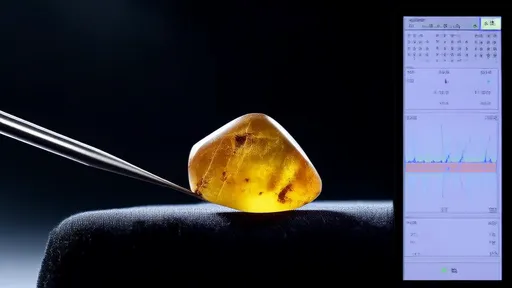
At its core, the Su Mian Bao technique involves a sophisticated process of base sealing and optical enhancement for rough gemstones. Unlike traditional methods that focus solely on surface treatments, this Thai innovation works by carefully analyzing the internal structure of each stone and applying targeted interventions at specific depth levels. The process begins with meticulous examination using advanced imaging technology to identify the stone's natural characteristics and potential areas for improvement.
What sets this technique apart is its non-invasive nature and reversible application. The treatment doesn't penetrate deep into the crystal structure but rather creates an optimized interface between the stone and its setting. Gemologists in Bangkok's famous jewelry district have perfected this method over nearly a decade of experimentation, combining traditional lapidary skills with modern material science.
The base sealing component involves applying a specially formulated optical film to the pavilion (bottom) portion of the rough stone. This film, developed through proprietary nanotechnology, interacts with light in ways that enhance the stone's natural optical properties. When executed properly, the treatment can dramatically improve a gem's brilliance, color saturation, and overall visual appeal without altering its fundamental composition.
Industry experts have noted that the Su Mian Bao technique represents a paradigm shift in how the trade approaches stone optimization. Where previous methods might have been viewed with skepticism by purists, this Thai innovation has gained acceptance because it works with the stone's natural attributes rather than against them. The treatment is particularly effective with certain types of corundum (ruby and sapphire), spinel, and some varieties of quartz.
One of the most remarkable aspects of this technology is its adaptability to different stone types and qualities. The treatment protocols vary significantly depending on whether the rough material is from Mozambique ruby deposits, Sri Lankan sapphire gravels, or Thai/Cambodian border zircon sources. Technicians customize the enhancement process based on each stone's unique fingerprint of inclusions, color zoning, and light behavior.
The ethical implications of gemstone treatments have always been controversial in the jewelry world. In this regard, the developers of Su Mian Bao have established clear disclosure protocols. Treated stones receive special certification that details exactly which optimization techniques were applied. This transparency has helped build trust with international buyers who increasingly demand full disclosure about any enhancements their gemstones may have undergone.
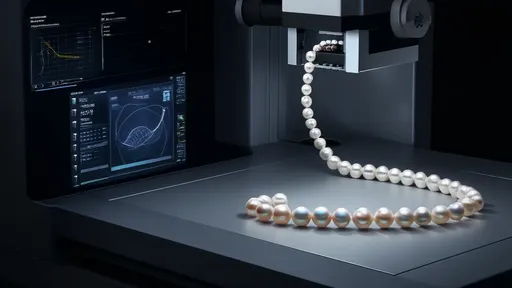
From a technical perspective, the process involves multiple precision stages. After initial cleaning and examination, stones undergo laser mapping to create a three-dimensional model of their internal structure. This digital blueprint guides the application of microscopic optical layers that compensate for natural flaws while preserving the gem's essential character. The final step involves a protective sealant that safeguards the enhancements while allowing for future removal if desired.
The economic impact of this technology on Thailand's gem trade has been substantial. By increasing the marketability of medium-quality rough material that might otherwise be discarded or sold at very low prices, the Su Mian Bao technique has created new opportunities for small-scale miners and cutters. Bangkok has solidified its position as a global hub for innovative gemstone processing, attracting buyers who seek high-quality optimized stones at various price points.
Looking ahead, researchers at Thailand's Gem and Jewelry Institute are working on next-generation versions of this technology. Early experiments suggest possibilities for dynamic optimization where the enhancement effects could be adjustable based on lighting conditions or even reversible entirely. As consumer preferences evolve toward more sustainable and transparent gemstone options, techniques like Su Mian Bao that offer enhancement without permanent alteration are likely to play an increasingly important role in the global jewelry market.
The success of this Thai innovation serves as a reminder that some of the most significant advancements in gemology often come from combining ancient craftsmanship with cutting-edge science. As the Su Mian Bao technique continues to develop and gain international recognition, it may well establish new standards for what constitutes acceptable treatment in the world of fine gemstones.
By /Aug 11, 2025
By /Aug 11, 2025
By /Aug 11, 2025

By /Aug 11, 2025

By /Aug 11, 2025
By /Aug 11, 2025
By /Aug 11, 2025

By /Aug 11, 2025

By /Aug 11, 2025

By /Aug 11, 2025
By /Aug 11, 2025

By /Aug 11, 2025

By /Aug 11, 2025
By /Aug 11, 2025

By /Aug 11, 2025

By /Aug 11, 2025
By /Aug 11, 2025
By /Aug 11, 2025

By /Aug 11, 2025

By /Aug 11, 2025