Pearl X-ray: Nuclear Pattern AI Recognition System

Aug 11, 2025 By

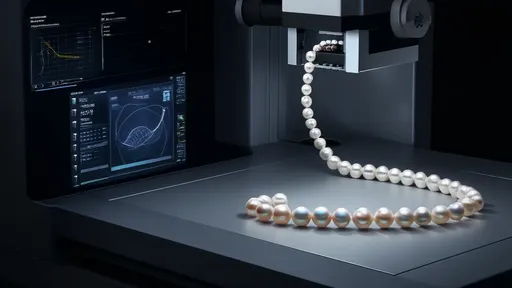
The gemological world is undergoing a quiet revolution as artificial intelligence merges with centuries-old pearl examination techniques. At the forefront stands Pearl X-ray, an innovative AI-driven system that's transforming how experts analyze the most intimate secrets of pearls - their nucleation patterns. This groundbreaking technology doesn't just look at pearls; it sees through them, revealing stories hidden within their crystalline structures that even seasoned gemologists might miss.

For decades, pearl grading relied heavily on the trained eye and experience of master appraisers. While X-ray imaging has been used since the mid-20th century to examine pearl interiors, interpretation remained subjective. The Pearl X-ray system changes this paradigm by combining high-resolution micro-CT scanning with deep learning algorithms specifically trained on over 500,000 nucleation patterns from natural, cultured, and imitation pearls across all major pearl-producing regions.

What makes this technology truly remarkable is its ability to detect subtle nucleation characteristics that indicate a pearl's origin and growth process. The AI doesn't merely identify whether a pearl is natural or cultured - it can pinpoint specific cultivation techniques, distinguish between freshwater and saltwater formations, and even detect sophisticated imitation methods that regularly fool conventional testing equipment.

The system works by constructing three-dimensional models of a pearl's internal architecture from hundreds of microscopic X-ray slices. Traditional two-dimensional pearl X-rays often missed critical structural evidence, but this volumetric approach captures the complete nucleation story. As Dr. Elena Marquez, lead researcher at the Gemological AI Institute explains: "Pearls grow like trees - their internal structure contains rings of development that tell us about environmental conditions, growth interruptions, and nucleation methods. The AI recognizes patterns in these growth rings that human eyes simply can't process consistently."

Commercial applications are already making waves in the pearl industry. Auction houses now use Pearl X-ray to verify high-value natural pearls before sales, with one recent case uncovering a $2.8 million "natural" pearl that the system identified as an extremely sophisticated cultured specimen. Pearl farms have adopted the technology for quality control, using nucleation pattern analysis to optimize cultivation conditions and improve yields. Perhaps most importantly, customs agencies in several countries are implementing the system to combat the growing trade in misrepresented pearls, estimated to cost the industry over $300 million annually.

Beyond authentication, the technology provides unexpected insights into marine biology. Researchers studying the impact of climate change on mollusks have partnered with Pearl X-ray developers to analyze how changing ocean conditions affect pearl formation. The AI's ability to detect microscopic variations in nacre deposition has revealed previously unnoticed correlations between water temperature fluctuations and structural weaknesses in pearls from certain regions.

The development team continues to refine the system's capabilities, with ongoing research focusing on historical pearl analysis. Museums have begun scanning their collections, and early results suggest the technology may help settle longstanding debates about famous pearls' origins. One current project involves analyzing pearls from royal collections to determine whether they originated from now-extinct oyster populations.

As with any disruptive technology, Pearl X-ray has sparked debates within the gem community. Some traditionalists argue that over-reliance on AI could erode valuable human expertise, while others worry about the potential for "AI fakery" - sophisticated imitation pearls designed specifically to deceive the system. Developers acknowledge these concerns but emphasize that the technology serves as a tool rather than a replacement for human judgment. "The AI provides evidence and probabilities," says project lead Dr. Hiro Tanaka. "Final determinations still require expert synthesis of all available data."

The ethical implications of perfect pearl identification raise interesting questions about valuation in an industry where mystery has long been part of a pearl's allure. If every pearl's origin and cultivation method becomes instantly knowable, how might this affect their perceived value? Early market data suggests transparency may actually increase confidence and prices for verified natural pearls, while putting downward pressure on premium cultured varieties that previously passed as natural.

Looking ahead, Pearl X-ray's developers plan to expand the system's capabilities to include treatment detection - identifying whether pearls have been dyed, irradiated, or otherwise enhanced. Parallel research is adapting the technology for other gemstones with internal growth structures, particularly emeralds and sapphires. As the system learns from each new specimen it analyzes, its identification accuracy continues to improve, creating a virtuous cycle of data collection and pattern recognition.

For consumers, the most immediate impact may come in the form of standardized pearl grading. The Gemological Institute of America and other major labs are reportedly in talks to incorporate Pearl X-ray data into their certification processes. This could lead to the first significant update to pearl grading standards in generations, with nucleation pattern analysis joining traditional factors like luster, surface quality, and shape in determining a pearl's grade.

The story of Pearl X-ray reflects broader trends in gemology, where advanced technologies are revealing hidden truths about nature's treasures. What began as a tool for detecting cultured pearls has evolved into a multidisciplinary platform with applications ranging from environmental science to art history. As the system continues to develop, one thing becomes clear: the inner beauty of pearls - their intricate, hidden structures - may ultimately prove as valuable as their famous luster.
Recommend Posts
Jewelry

Magnetic Buckle Load Bearing Limit

By /Aug 11, 2025

Magnetic snap fasteners have revolutionized product design across industries, offering sleek aesthetics and intuitive functionality. These ingenious closures rely on precisely engineered magnetic arrays to create secure yet detachable connections. However, one critical factor often overlooked in their implementation is their load-bearing capacity - a parameter that determines whether they're suitable for heavy-duty applications or better reserved for lightweight uses.
Jewelry

Pearl X-ray: Nuclear Pattern AI Recognition System

By /Aug 11, 2025

The gemological world is undergoing a quiet revolution as artificial intelligence merges with centuries-old pearl examination techniques. At the forefront stands Pearl X-ray, an innovative AI-driven system that's transforming how experts analyze the most intimate secrets of pearls - their nucleation patterns. This groundbreaking technology doesn't just look at pearls; it sees through them, revealing stories hidden within their crystalline structures that even seasoned gemologists might miss.
Jewelry

2025 Gold Jewelry: Sandblasting and Mirror Surface Mosaic Craftsmanship"

By /Aug 11, 2025

The jewelry industry is no stranger to innovation, but the fusion of contrasting textures in gold accessories has taken center stage as we approach 2025. Among the most striking developments is the marriage of sandblasted matte finishes with high-polish mirror surfaces—a technique that’s redefining luxury through bold visual tension. Designers are increasingly drawn to this interplay of light and shadow, where the roughness of sandblasted gold meets the liquid glow of mirrored planes, creating pieces that feel both raw and refined.
Jewelry

Italian Engraving: Buccellati Apprentice Assessment

By /Aug 11, 2025

The world of Italian jewelry craftsmanship is steeped in tradition, and few names evoke as much reverence as Buccellati. For generations, the Milan-based maison has set the gold standard for intricate hand-engraving and textured goldwork, techniques passed down through rigorous apprenticeships. Recently, the house held its annual apprentice examinations—a closely guarded ritual that separates skilled artisans from true masters of the craft.
Jewelry

Micro Pave Revolution: 1mm Gemstone Automatic Arrangement"

By /Aug 11, 2025

The jewelry industry stands on the brink of a transformative era with the advent of micro-setting technology. What began as painstaking handiwork requiring master craftsmen to spend hours aligning tiny gemstones has now evolved into a precision-driven automated process. At the heart of this revolution lies the ability to automatically arrange 1mm gemstones with unprecedented accuracy—a feat that merges cutting-edge engineering with artistic vision.
Jewelry

Amber Identification: Expansion of Infrared Spectrum Database"

By /Aug 11, 2025

The world of gemological research has taken a significant leap forward with the recent expansion of infrared spectroscopy databases for amber identification. As natural amber continues to captivate collectors and scientists alike, the need for more comprehensive analytical tools has become increasingly apparent. This development marks a crucial step in addressing long-standing challenges in amber authentication and classification.
Jewelry

Mineral Specimen: Seismic Resistance Mosaic Scheme

By /Aug 11, 2025

The world of mineral specimens is as diverse as it is fascinating, with each piece telling a unique geological story. Among the many challenges collectors and conservators face, ensuring the safe display and transportation of these delicate specimens is paramount. One innovative solution that has gained traction in recent years is the anti-seismic inlay technique, a method designed to protect fragile mineral samples from vibrations, shocks, and even seismic activity. This approach combines traditional craftsmanship with modern materials science, offering a robust yet aesthetically pleasing way to showcase geological treasures.
Jewelry

Antique Suit: Formula for Devaluation Loss from Disassembly and Sale

By /Aug 11, 2025

The world of antique collecting is filled with intricate nuances, where the value of an item often hinges on its authenticity, condition, and provenance. Among the most debated topics in this sphere is the concept of dismantled antique sets and the subsequent loss in their appraisal value. Collectors, auctioneers, and historians have long grappled with the financial and cultural implications of breaking up original sets, whether due to necessity, ignorance, or market demand. The phenomenon isn’t merely about monetary depreciation—it’s a reflection of how we perceive historical integrity and the stories behind these artifacts.
Jewelry

Fancy Color Premium: Definition of Fancy Color Grades

By /Aug 11, 2025

The world of colored diamonds operates on an entirely different valuation paradigm compared to their colorless counterparts. While the traditional D-to-Z scale governs white diamonds, Fancy Color Diamonds derive their worth from an intricate interplay of hue, saturation, and tone. The term "Fancy" isn't merely descriptive—it's a technical classification that triggers exponential price multipliers in the gemstone market. Understanding how grading laboratories delineate these color thresholds reveals why some pink diamonds command six figures per carat while others languish in commercial jewelry stores.
Jewelry

Raman Spectral Characteristic Peaks of Jadeite Processing

By /Aug 11, 2025

The gemstone trade has long grappled with the challenge of identifying treated jadeite, particularly as sophisticated enhancement techniques continue to evolve. Among the most reliable analytical tools for this purpose is Raman spectroscopy, which provides distinct spectral fingerprints that can differentiate natural from treated jadeite. This non-destructive technique has become indispensable for gemological laboratories and researchers aiming to authenticate jadeite specimens with precision.
Jewelry

Digitalization of Intangible Cultural Heritage Tools in Ancient Chinese Goldsmithing

By /Aug 11, 2025

In the heart of China's cultural renaissance, an extraordinary fusion of ancient craftsmanship and cutting-edge technology is taking shape. The meticulous art of ancient gold working, passed down through generations of master artisans, is undergoing a remarkable transformation through digital preservation. This ambitious project aims to safeguard the intangible cultural heritage tools and techniques that have defined Chinese gold craftsmanship for millennia.
Jewelry

Ruby Heat Treatment: Residual Substance Spectrometry Analysis Method

By /Aug 11, 2025

The heat treatment of rubies has long been a subject of fascination and scrutiny within the gemological community. This process, which enhances the stone's color and clarity, often leaves behind traces that can be detected through advanced analytical techniques. Among these, residual mass spectrometry has emerged as a powerful tool for identifying the telltale signs of thermal enhancement. By examining the minute chemical residues left behind, gemologists can distinguish between natural and treated rubies with remarkable precision.
Jewelry

Geometric Renaissance: Polyhedron Cutting Regression

By /Aug 11, 2025

The world of geometry is experiencing a quiet yet profound renaissance, one that harkens back to the classical elegance of polyhedral forms while embracing contemporary computational possibilities. Across design studios, architectural firms, and mathematical research departments, there's a growing fascination with the art and science of polyhedral dissection – the practice of strategically cutting three-dimensional shapes into smaller, often interlocking components.
Jewelry

Thai Noodle Treasure: Original Stone Seal Bottom Optimization Technology

By /Aug 11, 2025

The world of gemstone enhancement has witnessed a significant breakthrough with Thailand's innovative "Su Mian Bao" technique, a revolutionary approach to rough stone optimization. This cutting-edge method, whose name translates to "plain noodle bun" in Chinese due to its layered approach, has been making waves in the gemological community for its ability to transform ordinary-looking rough stones into visually stunning specimens while maintaining their structural integrity.
Jewelry

Design Draft: Archival Authentication System

By /Aug 11, 2025

The concept of an archival certification system has gained significant traction in recent years as institutions and organizations seek to standardize the way historical records, digital assets, and sensitive documents are authenticated and preserved. This system serves as a framework to ensure the integrity, accessibility, and longevity of archival materials, which are often critical for legal, historical, and administrative purposes. The push for a unified certification model reflects the growing need for trust and accountability in an era where digital transformation and data breaches pose new challenges to archival practices.
Jewelry

German Titanium Technology: Medical Grade Surface Treatment

By /Aug 11, 2025

Germany has long been recognized as a global leader in precision engineering and advanced manufacturing, particularly in the field of medical-grade titanium processing. The country’s expertise in titanium surface treatment sets a benchmark for quality, durability, and biocompatibility, making it indispensable for medical implants, surgical instruments, and dental applications. The meticulous attention to detail in German titanium processing ensures that the material meets the stringent requirements of the healthcare industry, where even the slightest imperfection can have significant consequences.
Jewelry

Diamond Identification: New Standards for Ultraviolet-Visible Spectroscopy

By /Aug 11, 2025

The diamond industry is undergoing a quiet revolution in identification and certification methods, with ultraviolet-visible (UV-Vis) spectroscopy emerging as the new gold standard for diamond analysis. This advanced analytical technique is reshaping how gemologists, jewelers, and certification laboratories evaluate and authenticate diamonds worldwide.
Jewelry

Silver Upgrade: Rhodium-Palladium Alloy for Anti-Oxidation

By /Aug 11, 2025

The world of silver jewelry is undergoing a quiet revolution as artisans and manufacturers seek solutions to one of the metal's most persistent challenges: oxidation. While silver's warm glow and affordability have made it a staple in jewelry boxes worldwide, its tendency to tarnish has long frustrated wearers and designers alike. Now, an innovative approach using rhodium-palladium alloys promises to redefine what we expect from silver accessories, offering unprecedented protection against discoloration while maintaining the metal's signature beauty.
Jewelry

Japanese Pearl: AI-Controlled Color Sorting Management

By /Aug 11, 2025

The Japanese pearl industry has long been synonymous with unparalleled quality and precision. In recent years, the integration of artificial intelligence (AI) into pearl sorting and color grading has revolutionized the sector, ensuring even higher standards of consistency and beauty. This technological advancement is particularly critical for maintaining Japan's reputation as a global leader in pearl production, where even the slightest variation in color can significantly impact value and desirability.
Jewelry

Rising Value Curve Model for Emerging Designers in Five Years

By /Aug 11, 2025

The fashion industry has always thrived on fresh talent, but the journey from emerging designer to established name remains shrouded in mystery. A new study tracking the career trajectories of over 200 breakthrough designers reveals a fascinating five-year appreciation curve that defies conventional wisdom. Unlike the traditional "overnight success" narrative, this data-driven model shows how true creative influence compounds gradually through distinct phases of experimentation, refinement, and strategic positioning.