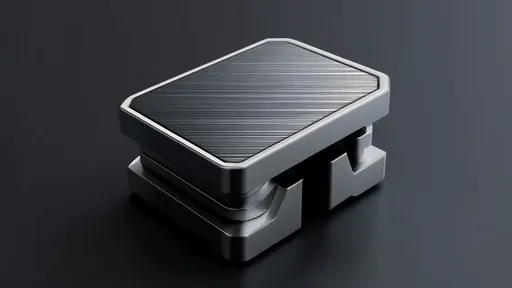
Magnetic snap fasteners have revolutionized product design across industries, offering sleek aesthetics and intuitive functionality. These ingenious closures rely on precisely engineered magnetic arrays to create secure yet detachable connections. However, one critical factor often overlooked in their implementation is their load-bearing capacity - a parameter that determines whether they're suitable for heavy-duty applications or better reserved for lightweight uses.
At the molecular level, the strength of magnetic attraction depends on the alignment of ferromagnetic domains within the material. Neodymium magnets, the most powerful permanent magnets commercially available, can generate pull forces exceeding 100 pounds in industrial-grade configurations. Yet the actual working load capacity of a magnetic snap fastener typically measures just 20-30% of its maximum pull force to account for dynamic stresses and safety factors.
Material composition plays a pivotal role in determining performance thresholds. While standard ferrite magnets might suffice for wallet closures or light jacket fasteners, applications like tactical gear or industrial equipment demand rare-earth composites. The geometry of the mating surfaces also dramatically influences functionality - concentric ring configurations distribute force more evenly than simple disc-to-disc contact points, allowing for higher load ratings without compromising the quick-release functionality.
Temperature stability represents another crucial consideration. Many high-strength magnets begin losing their magnetic properties at temperatures above 80°C (176°F), which could lead to catastrophic failure in automotive or aerospace applications. Advanced samarium-cobalt alloys maintain their magnetic characteristics up to 300°C (572°F) but come with significantly higher material costs.
Real-world testing reveals fascinating behavioral patterns under stress. Unlike mechanical fasteners that fail abruptly at their breaking point, magnetic connections exhibit a gradual degradation curve. This characteristic makes them ideal for fail-safe systems where progressive detachment is preferable to sudden separation. Engineers have documented cases where properly configured magnetic snaps maintained functionality even after 50,000 engagement cycles with minimal strength reduction.
Practical Applications and Industry-Specific Requirements
The medical device industry has embraced magnetic fasteners for their cleanliness advantages - no threads or crevices to harbor bacteria. MRI-compatible titanium housings with embedded magnets now secure everything from surgical drapes to portable imaging equipment. These specialized applications require precise calibration to ensure the snaps are strong enough to maintain sterility barriers yet weak enough for emergency detachment.
In consumer electronics, the quest for waterproof ratings has driven innovation in magnetic charging ports. The latest iterations can withstand 15 pounds of direct pull force while maintaining IP68 submersion protection. This delicate balance between mechanical retention and waterproof integrity involves complex gasket designs that complement the magnetic coupling rather than compete with it.
Industrial designers face unique challenges when implementing magnetic fasteners in vibration-prone environments. Heavy machinery panels secured with magnetic snaps require careful damping analysis to prevent harmonic resonance from weakening the magnetic bond over time. Some manufacturers have developed hybrid systems that combine permanent magnets with electromagnetic assists for critical applications where vibration could otherwise compromise security.
The automotive sector presents perhaps the most demanding performance requirements. Magnetic trunk closures on luxury vehicles must resist wind buffeting at highway speeds while remaining operable by elderly users. These systems often incorporate sensor arrays that monitor engagement integrity and can trigger warning lights if the magnetic seal weakens below safety thresholds.
Breakthroughs in material science continue to push the boundaries of what magnetic fasteners can achieve. Recent developments in nanostructured magnetic materials have yielded composites with directional adhesion properties - essentially creating snaps that are incredibly strong in the intended load direction but easy to detach with the correct twisting motion. This innovation has opened new possibilities in safety equipment where rapid donning and doffing can mean the difference between life and death.
Looking ahead, researchers are exploring adaptive magnetic systems that can modify their holding strength based on environmental conditions or user input. Imagine a climbing harness that automatically increases its magnetic connection strength as the load increases, or a child safety gate that weakens its magnetic hold when an adult applies specific pressure patterns. These smart systems could redefine our understanding of magnetic fasteners' role in load-bearing applications.
As with any engineering solution, proper implementation requires thorough understanding of both the capabilities and limitations. While magnetic snap fasteners offer numerous advantages over traditional mechanical fasteners, their load-bearing characteristics must be carefully matched to application requirements. The most successful implementations occur when designers view the magnetic connection not as a simple on/off mechanism but as a dynamic interface with carefully tuned performance parameters.
By /Aug 11, 2025
By /Aug 11, 2025

By /Aug 11, 2025

By /Aug 11, 2025

By /Aug 11, 2025

By /Aug 11, 2025

By /Aug 11, 2025

By /Aug 11, 2025

By /Aug 11, 2025

By /Aug 11, 2025

By /Aug 11, 2025

By /Aug 11, 2025

By /Aug 11, 2025

By /Aug 11, 2025

By /Aug 11, 2025

By /Aug 11, 2025
By /Aug 11, 2025

By /Aug 11, 2025

By /Aug 11, 2025

By /Aug 11, 2025