The fashion world is abuzz with the impending clash of two radically different bag silhouettes as we approach 2025. What began as subtle runway whispers has exploded into a full-blown style debate: will the architectural triangular pouch dominate, or shall the practical wide-grip trolley bag claim victory? This isn't merely about storage solutions—it's a cultural referendum on how we move through modern life.
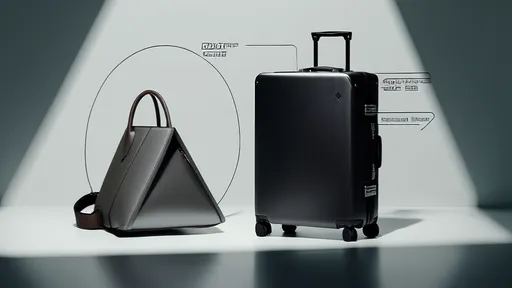
At first glance, these designs appear to hail from different planets. The triangular pouch, with its origami-like precision, seems designed for Instagram aesthetics rather than utility. Its sharp angles and minimalist surfaces reject traditional bag language entirely—no obvious openings, no visible hardware. Yet this geometric rebellion speaks volumes about our post-digital relationship with physical objects. Meanwhile, the wide-grip trolley bag announces itself with almost brutal functionality. Its expanded handle system accommodates multiple carrying positions, from shoulder-drape to cross-body to briefcase grip, suggesting we've entered an era of ergonomic obsession.
Parisian avant-garde labels have embraced the triangular form with religious fervor. The silhouette's mathematical purity allows for astonishing material experiments—imagine laser-cut vegan leather that maintains structural rigidity or recycled aluminum frames wrapped in cashmere. These aren't bags so much as wearable sculptures, each plane serving as a canvas for texture play. Early adopters report an unexpected benefit: the triangular shape naturally organizes contents into distinct zones without internal dividers. Your laptop slides against one face, documents find their angle, and personal items collect in the remaining space like a game of geometric Tetris.
Contrast this with the wide-grip movement emerging from Tokyo's commuter culture. Designers have essentially reinvented the wheel—or rather, the handle. By expanding the traditional trolley grip to nearly double width, they've created a bag that moves seamlessly between transportation modes. The wider distribution of weight has physiotherapists nodding approvingly, while fashion critics note how the exaggerated handles create bold visual lines when worn. Some versions incorporate smart technology directly into the handles—built-in touchscreens for navigation, pressure sensors that alert you to uneven weight distribution, even haptic feedback that guides you through crowded streets.
Material innovation tells competing stories. Triangle pouch artisans favor high-tech composites that hold razor-sharp edges—thermal-molded polymers that remember their shape, carbon fiber weaves thin as paper yet strong as steel. The wide-grip camp celebrates tactile humanity, with developments in "living materials" that improve with use: vegetable-tanned leathers that develop unique patinas, woven bamboo handles that conform to your grip over time. Both approaches reject fast fashion's disposability, instead promising objects meant to evolve with their owners.
Cultural commentators position this as a battle between two modern archetypes. The triangle pouch speaks to our curated digital selves—precise, edited, intentionally unnatural. Its popularity among Gen Z influencers suggests a generation comfortable with artifice as self-expression. Meanwhile, the wide-grip trolley's surge among millennial urbanites reflects pragmatic idealism—a desire for tools that enhance real-world experience without sacrificing style. Interestingly, both designs share an unexpected commonality: neither fits neatly under airplane seats, forcing travelers to reconsider their packing strategies entirely.
The retail landscape has become a fascinating testing ground. Concept stores report triangle pouches flying off shelves despite (or perhaps because of) their impracticality—the more challenging the opening mechanism, the greater the status symbol. Meanwhile, premium luggage brands can't keep wide-grip models in stock, with waiting lists stretching months. This polarization suggests we may be entering an era of "bag bipolarity," where extreme designs coexist without a clear winner. Some forward-thinking designers are already experimenting with hybrids—triangular forms with hidden wide handles, or trolley bags that collapse into geometric shapes when not in use.
What does this mean for the future of personal carry? The triangle versus wide-grip debate mirrors larger societal tensions between form and function, between standing out and fitting in. As we approach 2025, one thing becomes clear: the golden age of boring bags is over. Whether you choose angular precision or ergonomic embrace, your bag will now demand as much attention as the rest of your outfit—and perhaps reveal more about your worldview than you intended.
By /Aug 15, 2025

By /Aug 15, 2025

By /Aug 15, 2025

By /Aug 15, 2025

By /Aug 15, 2025
By /Aug 15, 2025

By /Aug 15, 2025

By /Aug 15, 2025

By /Aug 15, 2025
By /Aug 15, 2025
By /Aug 15, 2025

By /Aug 15, 2025
By /Aug 15, 2025

By /Aug 15, 2025

By /Aug 15, 2025

By /Aug 15, 2025
By /Aug 15, 2025
By /Aug 15, 2025

By /Aug 15, 2025

By /Aug 15, 2025