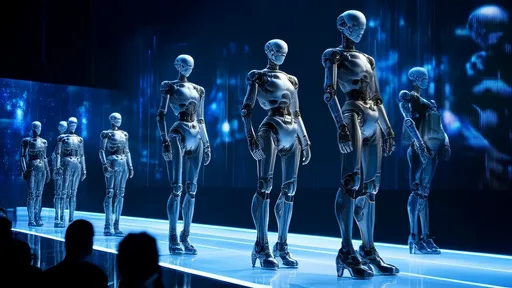
The fashion industry has always been a realm of human creativity, where designers pour their souls into fabrics and models bring garments to life with their unique presence. But as the first robotic model strutted down the runway at a recent high-profile fashion show, the audience witnessed something unprecedented—a seamless fusion of technology and artistry that may forever alter the landscape of fashion.
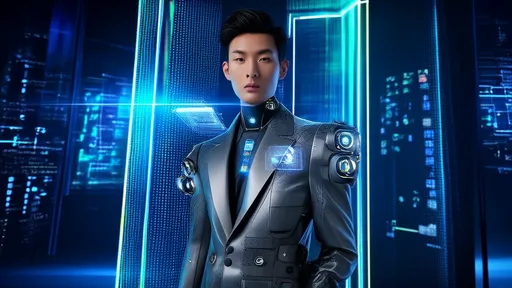
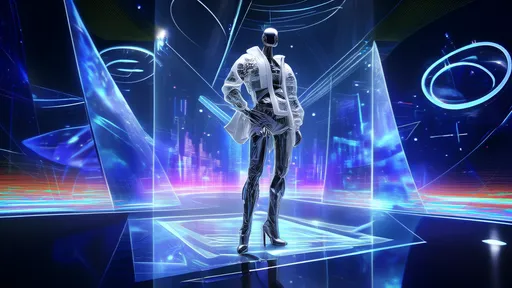
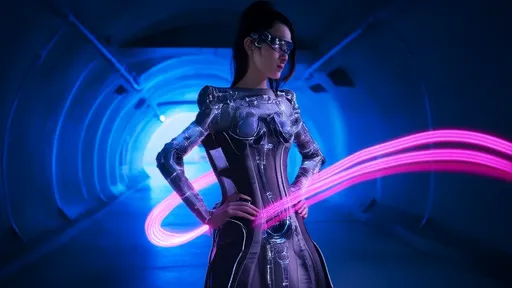
These robotic models, powered by advanced AI and precision engineering, move with an otherworldly grace. Their limbs articulate in ways that defy human limitations, their expressions unchanging yet somehow evocative. Designers are quickly realizing that these machines offer more than just novelty—they provide a blank canvas unconstrained by the physical and temporal boundaries of human models.
The emergence of robot models challenges fundamental assumptions about fashion presentation. Where human models bring individuality and imperfection, robots deliver flawless reproducibility. A single robotic model can showcase multiple outfits in rapid succession without fatigue, and their movements can be perfectly synchronized to create mesmerizing geometric formations impossible with human performers.
Backstage, the atmosphere has transformed. Instead of hair and makeup artists bustling about, technicians calibrate servos and update firmware. The dressing room has become a charging station, where models power up between shows rather than refresh their lipstick. This shift represents not just a change in tools, but a fundamental reimagining of what backstage production means in the digital age.
Critics argue that fashion loses its human touch when models become machines. They mourn the loss of the emotional connection that comes from seeing garments move on breathing bodies. Yet proponents counter that robotic models allow for pure focus on the clothing itself—the way fabric drapes across mechanical joints, how light reflects off surfaces in mathematically perfect walks.
The environmental implications are equally profound. Robot models eliminate the carbon footprint associated with flying human models across continents for fashion weeks. Their durability means they can participate in countless shows without replacement, reducing waste in an industry often criticized for its excess. Some forward-thinking brands are already marketing this sustainability angle to eco-conscious consumers.
Perhaps most revolutionary is how AI-powered models enable personalized fashion experiences. With facial recognition and body scanning, these robots can adapt their runway walks to highlight how garments would look on different body types in real-time. Some luxury brands are experimenting with shows where the robotic models morph their proportions to match individual viewers' measurements projected through augmented reality.
The business model of modeling agencies faces disruption as well. Traditional agencies are scrambling to establish "roster divisions" for mechanical talent, while new firms specialize exclusively in programming robotic models with distinctive "personalities" through movement algorithms. The most sought-after robotic models now have signature walks as recognizable as any supermodel's strut.
As the technology progresses, we're seeing the first generation of learning models that can adapt their performances based on audience reaction. Sensors detect applause volume and duration, allowing the AI to modify its pacing and presentation for maximum impact. Some experimental shows feature models that change their entire demeanor based on the emotional tone detected in social media feeds during the event.
The legal landscape struggles to keep pace. Who owns the rights to a robotic model's walk—the programmer who coded it, the engineer who built the body, or the agency that leased it? Can a machine's runway performance be copyrighted? These questions spark heated debates in fashion law circles as the industry grapples with intellectual property in the age of AI.
Looking ahead, the most exciting developments may come from collaborations between human and robotic models. Several visionary designers have created pieces that only come alive when worn by both—garments that transform when passed from human to machine, or accessories that interact wirelessly with robotic elements on the runway. This symbiotic relationship suggests a future where biological and artificial beauty enhance each other rather than compete.
The front row at fashion shows tells its own story. Where editors once scrutinized human models with knowing glances, they now watch robotic performers with a mix of awe and apprehension. Their notebooks fill not just with comments about hemlines and silhouettes, but with questions about what this means for the soul of fashion. One thing is certain—the runway will never be the same.

By /Aug 15, 2025
By /Aug 15, 2025

By /Aug 15, 2025
By /Aug 15, 2025
By /Aug 15, 2025
By /Aug 15, 2025
By /Aug 15, 2025
By /Aug 15, 2025
By /Aug 15, 2025
By /Aug 15, 2025
By /Aug 15, 2025
By /Aug 15, 2025
By /Aug 15, 2025

By /Aug 15, 2025

By /Aug 15, 2025

By /Aug 15, 2025
By /Aug 15, 2025
By /Aug 15, 2025
By /Aug 15, 2025
By /Aug 15, 2025