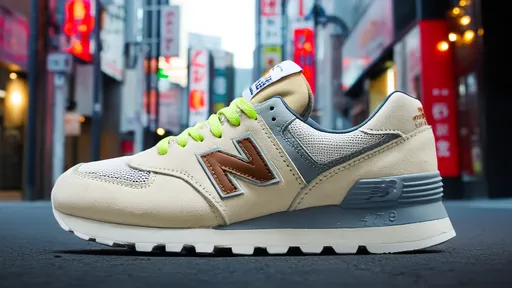
The streets of Tokyo have long been a breeding ground for fashion subcultures, where the collision of traditional aesthetics and rebellious youth energy creates unexpected trends. In recent months, a peculiar DIY movement has been gaining traction among Japan's style-conscious youth, centered around an unlikely hero: the New Balance 471. What began as subtle customization has evolved into a full-blown footwear revolution, with double-lacing techniques becoming the signature of this underground style wave.
Unlike the flashy hype surrounding limited-edition collaborations, this trend thrives on personal expression through modification. The New Balance 471, originally designed as a no-frills running shoe from the late 1980s, has become the perfect canvas for Japan's streetwear enthusiasts. Its clean lines and understated silhouette provide the ideal foundation for creative customization while maintaining that crucial balance of authenticity and innovation.
The double-lacing phenomenon first emerged in the backstreets of Harajuku, where style rebels began experimenting with unconventional ways to wear their sneakers. By utilizing both sets of eyelets simultaneously - something the 471's unique construction allows - wearers create intricate lattice patterns or bold contrast effects. Some opt for complementary color pairings, while others play with texture by combining flat waxed laces with round nylon ones. The result is a footwear style that looks store-bought yet intensely personal.
What makes this trend particularly Japanese is its meticulous attention to detail. Unlike Western sneaker culture's emphasis on rare finds and pristine condition, the Japanese approach celebrates the transformation process itself. "It's not about having the rarest shoes," explains Ryo Takahashi, a boutique owner in Daikanyama, "but about how you make them yours. The double lacing is just the beginning - many kids are adding custom embroidery, painting the midsole, or even distressing the suede to create something truly unique."
The movement has grown organically through Instagram and street photography blogs rather than corporate marketing. Tokyo's sneakerheads have developed an entire visual language around their modified 471s, with certain lacing patterns indicating subcultural affiliations. A crisscross double tie might signal a connection to the city's skate scene, while parallel straight laces could denote a more minimalist fashion approach.
New Balance Japan has taken notice of this grassroots movement, though they've been careful not to co-opt it too aggressively. Limited releases of the 471 in customizable colorways have appeared in select Tokyo stores, often selling out within hours. The brand's subtle endorsement has given the trend additional legitimacy while maintaining its underground credibility. This delicate dance between corporate and street is quintessentially Japanese - where commercial success doesn't necessarily equate to selling out.
Beyond the lacing techniques, the 471 trend represents something deeper in Japanese fashion psychology. In a market saturated with identical luxury items and mass-produced streetwear, the ability to personalize becomes the ultimate status symbol. Your lacing pattern becomes as identifiable as your face in certain circles. This explains why some devotees spend hours perfecting their techniques, sometimes redoing their laces multiple times a day to achieve the perfect drape and tension.
The trend has begun influencing other aspects of Japanese street style. Oversized cargo pants are being tailored to specifically showcase the intricate lacing work, while sock choices have become more considered to complement the dual-color schemes. Even the way people walk has adapted - some wearers develop a slightly exaggerated stride to better display their handiwork.
As with many Japanese fashion movements, there's an underlying philosophy to the 471 customization craze. It's not just about looking different, but about the meditative process of creation and the pride in craftsmanship. In fast-fashion world, taking forty minutes to properly lace your sneakers becomes a radical act. The trend speaks to a generation that values slow fashion and personal investment in their wardrobe.
International attention is starting to grow, with fashion scouts from Paris and New York documenting the phenomenon. However, purists argue that the trend can't truly be exported - that it's fundamentally rooted in Tokyo's particular blend of tradition and innovation. Whether this proves true or not, one thing is certain: the humble New Balance 471 has become unlikely muse for Japan's creative youth, proving that sometimes the most interesting fashion statements come not from what you wear, but how you wear it.

By /Aug 15, 2025

By /Aug 15, 2025

By /Aug 15, 2025

By /Aug 15, 2025

By /Aug 15, 2025
By /Aug 15, 2025

By /Aug 15, 2025

By /Aug 15, 2025
By /Aug 15, 2025
By /Aug 15, 2025
By /Aug 15, 2025

By /Aug 15, 2025
By /Aug 15, 2025

By /Aug 15, 2025

By /Aug 15, 2025

By /Aug 15, 2025

By /Aug 15, 2025

By /Aug 15, 2025

By /Aug 15, 2025

By /Aug 15, 2025